
Main Page
Film Festivals
 The Artist 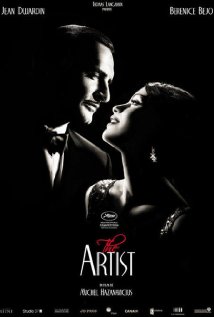 In 1927 Hollywood, George Valentin (Jean Dujardin), a huge star in silent romantic/adventure melodramas, lives a glamorous life with his loving wife, Doris (Penelope Ann Miller) and dog. He even has his own chauffeur, Clifton (James Cromwell). When producer Al Zimmer (John Goodman) shows him some clips of movies with sounds, a.k.a. “talkies,” a new format that will soon replace silent movies, George refuses to believe in the new technology, storms off and starts directing and starring in his own silent films. Meanwhile, as he falls from fame into despair and even bankruptcy during the Great Depression, his co-star Peppy Miller (Bérénice Béjo), rises to fame in Hollywood. Shot in glorious black-and-white, The Artist will dazzle you with its visuals and captivate you with its lively performances so much that you’ll easily forget that it’s actually a silent movie and not in color. Writer/director Michel Hazanavicius imbues the film with a plethora of wit, charm, humor and a little poignancy along the way. Finding the right tone can be quite a challenge, but he achieves it above and beyond without it ever feeling uneven or over-the-top. The same can be said for the performances all across the board whether it’s the charismatic, playful Jean Dujardin, the sizzling and radiant Bérénice Béjo or even the cute little dog that would get a nomination if there were Best Performance by a Dog category at the Oscars. A true classic movie is one that not only provokes you intelligently and emotionally while thoroughly entertaining you, but also takes some risks. The Artist certainly takes risks being a silent, black-and-white movie because there’s simply no other film like it in today’s world, unless you count the experimental films that aren’t exactly delightful or accessible for mainstream audiences. The risks this film takes pay off tremendously, and audiences will be rewarded with a sense of joy and exhilaration upon leaving the theater. At a running time of 1 hour and 40 minutes, The Artist is an invigorating, charming, witty and crowd-pleasing delight that’s destined to become a classic while skyrocketing the careers of Jean Dujardin and Bérénice Béjo. 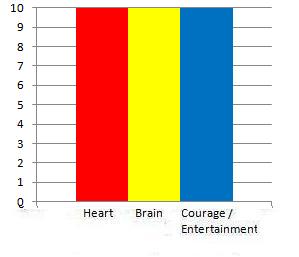 The Kid With a Bike 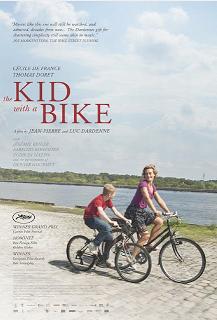 11-year-old Cyril (Thomas Doret) breaks out of an orphanage to find his father (Jérémie Renier) who had abandoned him. He desperately wants to live a normal life with his father, but he's unwilling to acknowledge the fact that his father doesn't want to see him anymore. He feels saddened when he learns that his bicycle had been sold by him--a metaphor for their relationship--so Cyril searches for that precious bike. A friendly hairdresser, Samantha (Cécile de France), not only helps him get his bike back, but also takes him under her care. She represents the small glimmer of hope, happiness, love, compassion and friendship that's missing from his life. No matter what, though, Cyril doesn't feel content without his father around, and he stubbornly refuses to give up attempting to reunite with him--or to face the harsh reality of the situation for that matter. He soon enters a dangerous lifestyle when he befriends a local thug, Wes (Egon Di Mateo), who teaches him how to beat people up and rob them, an extreme way of channeling his bottled-up rage and frustrations. Co-writers/directors Jean-Pierre and Luc Dardenne, a.k.a. The Dardenne Brothers, have woven a richly textured and human drama brimming with warmth, tenderness and pure, unadulterated poignancy. Rarely has a film captured the complex thoughts and feelings of a troubled young boy with such honesty without going over-the-top or losing its focus. It also helps that child actor Thomas Doret gives a brave, well-nuanced performance as Cyril that tugs at your heartstrings from the very first scene. Cyril's friendship with Samantha feels palpably sweet, and you'll find it interesting to observe how their relationship evolves as Cyril struggles to accept the fact that his father abandoned him. His emotional journey takes you on a roller coaster ride that's difficult to describe or even explain--it's best to simply experience it because words wouldn't be able to do it any justice. Moreover, the well-chosen music score perfectly compliments the film's tone and keeps you even further engrossed. 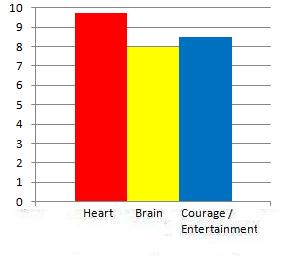 This is Not a Film 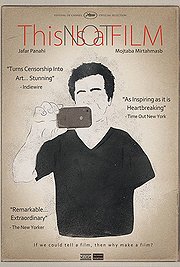 Back in 2010, filmmaker Jafar Panahi was sentenced for six years in prison and banned from making movies for the next twenty years. Despite being under house arrest, Panahi, with the help of his friend, Mojtaba Mirtahmasb, filmed his daily life at home in Iran. Mirtahmasb filmed Panahi on a small digital video camera as Panahi discussed his process of filmmaking and analyzed scenes from the past films he had directed, i.e. The Circle, Crimson Gold, and Offside. If you haven't seen any of those films, this documentary will surely compel you to check them out. Panahi not only shares his thoughts and feels on his films, but also about art in general. From start to finish, he comes across as an intelligent, brave, curious and candid individual which makes him all the more engaging and poignant. At its core, this documentary isn't really about Panahi; it's about the potency of art during time of oppression, and about how important it is to overcome one's fear and express his/her thoughts and feelings openly. The fact that Panahi achieved all of that while knowing that he could be sent to jail at any moment is feat unto itself. He even took more risks by having the film smuggled inside a cake from Iran to France where it premiered at the Cannes Film Festival. As a Holocaust survivor once wisely stated, you can have every freedom and luxury taken away from you from oppressors, but, unless they kill you, they can't take away from you a truly useful, often underused tool: your brain. Panahi, fortunately, puts his own brain to great use both intellectually as well as creatively throughout the film. It's also worth noting the few instances of dry humor, such as when Panahi let a pet iguana crawl on top of him while he sits on his couch surfing the web--not surprisingly, the Iranian government has censored many websites. There's also a little suspense when Panahi calls his lawyer to find out any updates on the status of his case.This is Not a Film ultimately has an abundance of insight, poignancy, truth and intrigue which makes for an experience that you won't forget anytime soon. 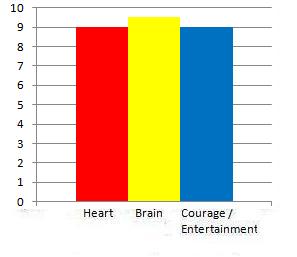 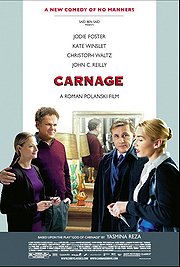 Carnage (directed by Roman Polanski), the Opening Night Film, features Oscar-worthy performance by John C. Reilly, Jodie Foster, Christoph Waltz and Kate Kinslet who star as two pairs of parents arguing over a fight that their children were involved in. It's based on a play by Yasmina Reza, and especially by the one-hour mark that still takes place within the same apartment, it certainly feels like a play. That staginess makes some of the later scenes feel a bit awkward, but what keeps Carnage afloat besides the great performances is the witty, sardonic and comedic banter between the parents as they gradually lose their ability to control their temper. Sony Pictures Classics releases Carnage on December 16th, 2011 at Lincoln Plaza Cinemas and the Angelika Film Center. 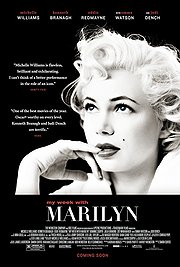 My Week with Marilyn (directed by Simon Curtis), the Centerpiece Gala, focuses on the romance between Colin (Eddie Redmayne) and Marilyn Monroe (Michelle Williams) whom he met while working as a third assistant director for Sir Laurence Olivier (Kenneth Branagh) during the production of The Prince and the Showgirl. There's no denying that Michelle Williams looks like, sounds like and behaves like Marilyn Monroe, so her radiant performance carries the film and deserves to lead to an Oscar nomination for Best Actress. Kenneth Branagh also nails his role convincingly and chews the scenery. Unfortunately, Eddie Redmayne gives a bland performance, but that's not entirely his fault because the character he plays is also rather uninteresting. Less scenes with Colin and more of Marilyn would have made for a much more powerful and moving film rather than a mediocre one. The Weinstein Company releases My Week with Marilyn on November 23rd, 2011. 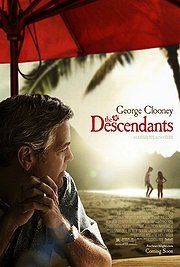 The Descendants (directed by Alexander Payne) is the New York Film Festival's Closing Night Film. George Clooney plays Matt, a real estate lawyer, who struggles to cope with the aftermath of his wife's boating accident that left her comatose. He bonds with his two children, 17-year-old Alex (Shailene Woodley) and 10-year-old Scottie (Amara Miller) while forced with a dilemma about whether or not to sell his family's precious land in Hawaii. He also confronts Brian (Matthew Lillard) when he that he had an affair with his wife. Judy Greer plays Brian's wife (Judy Greer) who doesn't suspect any infidelity in her husband until Matt shows up at their door. What makes The Descendants a truly remarkable film is how deeply human, honest and well-nuanced it feels. Not only does it have stellar performances, a great soundtrack and picturesque cinematography, but its screenplay feels real and so do its characters. Just like any classic film, it can't really and fairly be classified in one or more particule genre(s) because it's complex and hard to truly describe much like life itself. Director/co-writer Alexander Payne should be commended for bringing out so much warmth, humanity, tenderness, beauty and unflinching sadness together with a little comic relief which makes for a very rewarding and memorable experience unlike any other American film in recent years. Fox Searchlight Pictures releases The Descendants on November 18th, 2011. 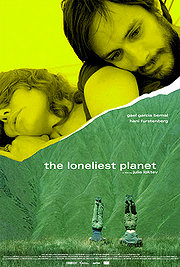 In The Loneliest Planet (directed by Julia Loktev), Alex (Gael García Bernal) and his fiancée, Nica (Hani Furstenberg), go backpacking in the Caucasus Mountains of Georgia a year before their wedding. They talk, joke around, and bond with one another, but their relationship becomes threatened after they meet a man (Bidzina Gujabidze) who agrees to become their tourguide. Sure, the drama has a slow pace and very little happens until later on the film, but it boasts beautiful scenery with plenty of images that will haunt you----Nica's long, bright red hair in particular becomes a character of its own. It's also worth mentioning that the chemistry between Alex and Nica feels palpable, and there's one hysterically funny sequence where Nica mispronounces certain words in sentences, i.e. "I took the bitch to the beach," and "I took a shit on the sheet." The film has a very meditative mood because of its many quiet, yet powerful moments. Sundance Selects releases The Loneliest Planet on August 24th, 2012. ______________________________________________________ |
The NYC Movie Guru
themovieguru101@yahoo.com
Privacy Policy